Summer Interior Design Ideas for your Homes: How to Keep Your Space Cool, Bright, and Beautiful
Introduction: Why Summer Is the Best Time to Rethink Your Home Interiors
Summer is around the corner, and it is getting hotter. We prepare for summer in various ways, including wearing lighter clothing, enjoying seasonal foods, and making small lifestyle adjustments. But what about your home? Have you ever considered preparing your home for summer?
Think about it for a second…
As the season sets in, many homes begin to feel warmer, heavier, and a little less comfortable, especially during the afternoons. Even with windows open or fans running, some spaces still feel stuffy. Ever wondered why that happens?
Most of the time, it is not just the weather. It is how our rooms and interiors are set up, including their colors, furniture placement, fabrics, and how air and light move through them.
Let’s look at how you can easily give your home a seasonal refresh with simple summer interior design ideas.
Thoughtful changes in colour, layout, and materials can make your home cooler and more comfortable this summer.
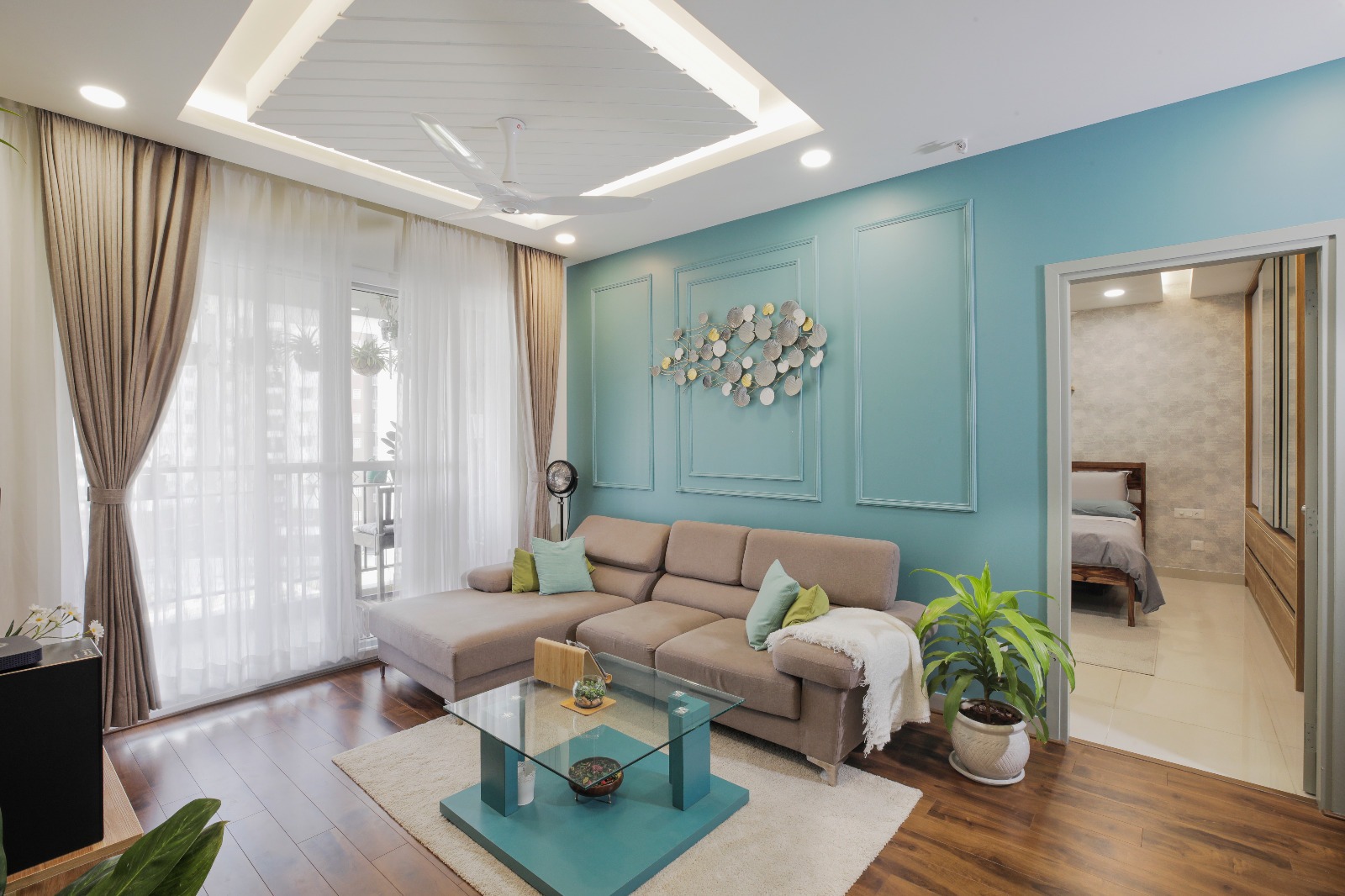
When summer arrives, the first thing many people think of is painting their home white to keep it cool. It sounds like the obvious choice, right? But in reality, pure white walls do not always work well in Indian homes.
Under strong tropical sunlight, especially during peak afternoons, bright white walls can create glare. Instead of feeling calm and cool, the space can start to feel harsh on the eyes. It also shows dust quickly and tends to look dingy after the first monsoon season.
The better approach is to think in terms of Light Reflectance Value (LRV), the metric that measures how much light a colour reflects on a scale from 0 (black, reflects nothing) to 100 (pure white, reflects everything).
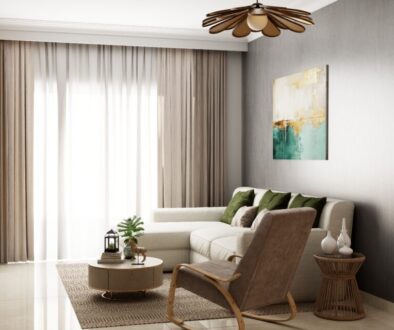
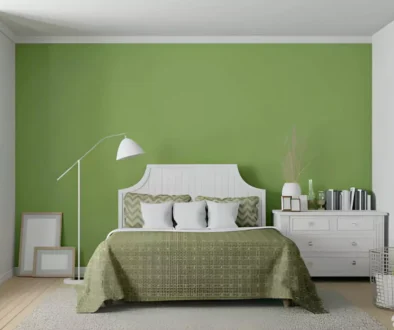
Shades like warm off-whites, soft beiges, muted greens, and pale blues tend to work much better. These colours make a room feel light, airy, and visually comfortable throughout the day.
One simple trick that makes a big difference is the ceiling colour. Most homeowners overlook this, but it plays a significant role in determining how a room feels. Painting the ceiling slightly lighter than the walls can instantly make the space feel taller and more open. Even in a standard apartment, this small change can make the room feel noticeably more breathable.
For a full room-by-room colour breakdown, Vastu alignment, and Indian paint brand recommendations, check out Summer Colour Palettes for Indian Homes: What Actually Works
Window Treatments: Blocking Heat Without Blocking Light
Windows are one of the biggest reasons homes heat up during summer. Direct sunlight entering through glass can quickly raise the temperature inside, making rooms uncomfortable even if everything else is well designed. The goal is not to block sunlight completely but to control it.
Layering works best here. Using sheer curtains allows natural light and airflow, while adding blinds or light drapes helps reduce heat when needed. For bedrooms, especially where early morning sunlight is strong, blackout blinds can help improve sleep comfort. A small but important detail is how these blinds are installed. Fixing them slightly above the window instead of inside the frame helps block heat more effectively and prevents light gaps.
Read more on: Summer Window Treatments for Indian Homes: Block Heat, Not Light.
Flooring: The Surface Beneath Your Feet Matters More Than You Think
Choosing the Right Flooring for Summer
Flooring has a bigger impact on comfort than most people realise. During summer, the temperature of the floor can vary depending on the material used.
Floor temperature has a direct effect on how hot a room feels. A cool floor lowers perceived room temperature. A warm floor, especially in a room that is already heating up from above, makes thermal discomfort significantly worse.
Since floors are used throughout the day, whether walking barefoot, sitting, or relaxing, choosing the right material can make daily living more comfortable.
The naturally coolest flooring materials available in India are:
- Vitrified tiles
- Marble
- Kota stone
- Terracotta tiles
Stone and tile stay naturally cooler. Vitrified tiles, marble, and Kota stone all work well. Large-format tiles have a practical edge: fewer grout lines, easier to clean, and they feel smooth and cool rather than textured and slightly warm.
Among these, large-format tiles are often a practical choice because they are easy to maintain and feel comfortable underfoot.
What to use carefully in summer: wood flooring and thick carpets. Both trap heat and feel warm underfoot. If you have wooden flooring, a jute or cotton dhurrie over it in summer improves comfort considerably.
Read more: Best Flooring for Indian Summers: Cool, Durable, and Easy to Maintain.
Natural Materials That Make a Difference
There is a design philosophy called biophilic design that has become one of the dominant trends in global interior design in 2025. At its core, it is about connecting indoor spaces to nature through colour, material, and light. Research shows that biophilic environments reduce stress, improve air quality perception, and make people feel more thermally comfortable even at the same actual temperature.
In a modern Indian home, the simplest summer upgrade is often not a renovation. It is replacing synthetic, heat-trapping materials with natural ones. Indian vernacular architecture practised biophilic design without naming it for centuries.
There is a reason traditional Indian homes used bamboo, cane, jute, and terracotta. It was not just aesthetics or economics. These materials breathe. They do not trap heat. They sit lightly in a space rather than adding thermal mass to it.
When it comes to summer comfort, natural materials still work best.
They allow better airflow, do not trap heat, and create a lighter feel inside the home. Adding elements like cane furniture, jute rugs, bamboo blinds, or terracotta décor can instantly make interiors feel more relaxed and breathable.
Even adding a few of these to a room set up with mainly synthetic and manufactured materials changes how the space feels. Not just visually lighter, but actually cooler.
Read more in the blog: Natural Materials for Summer Interiors: Why Jute, Cane, and Bamboo Still Win.
Passive Cooling: The Science Your Walls and Ceilings Can Do for Free

Passive cooling refers to design strategies that reduce indoor heat without mechanical cooling systems. Traditional Indian architecture was built almost entirely on passive cooling principles. Modern apartments have largely abandoned them in favour of uniform construction and centralised air conditioning. But the principles still apply, and many can be retrofitted.
Cross ventilation is the easiest and most powerful way to cool your home.
It works when air enters from one side of the room and exits from another. This constant airflow pushes out hot air and brings in fresh air.
If you are planning a long-term improvement, thermal insulation can make a big difference. Treating roofs, walls, or windows can reduce heat entering the home and improve indoor comfort significantly.
Even small additions like window films or better shading can help control heat without affecting natural light.
These reduce how hard the AC has to work, leading to lower electricity bills and a more comfortable baseline, even on days when the power goes out. Neither requires structural work, and most can be done over a weekend.
Summer Kitchen Design: Making Cooking Comfortable
A kitchen in April, with a pan on the stove, no external ventilation, and afternoon sun on the window, can get genuinely uncomfortable. The fixes are not complicated.
Cooking, electrical appliances, occupants, and lighting all generate heat. In a poorly ventilated kitchen, a single hour of cooking can raise the room temperature by several degrees.
Improving ventilation is the first step. A chimney that vents externally removes hot, humid air from the room rather than filtering and recirculating it. This alone changes how the kitchen feels during cooking.
Choosing lighter finishes, matte surfaces, and practical materials also helps keep the kitchen more comfortable and easy to maintain.
Creating a Comfortable Summer Bedroom

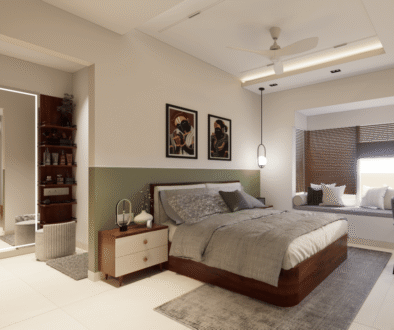
A good summer bedroom should feel cool, calm, and easy to relax in. You can have a comfortable living room and still feel uncomfortable if the bedroom holds heat until midnight.
A bedroom that retains heat past midnight is a sleep health issue, not just a comfort concern. Good summer bedroom design supports temperature reduction through material choices, colour, and layout.
This comes down to three things:
- Light control
- Breathable materials
- Thoughtful layout
Using fabrics like cotton or linen for bedding makes a noticeable difference. These materials do not trap heat and feel comfortable throughout the night.
Soft lighting and minimal décor also help create a more relaxed environment, especially during warm evenings.
Ready to Make Your Bangalore Home Summer-Proof?
We believe most homes in Bangalore don’t have a heat problem. They have a design problem that shows up every summer.
We’ve seen it dozens of times at WEA Designs. Homeowners who’ve spent good money on interiors, only to find themselves sweating through April wondering where it all went wrong. The curtains are up, the AC is running, everything looks fine. But the home just doesn’t feel right.
That’s usually a sign that no one looked at the home the way a proper home interior designer should.
We fix that.
If you’re thinking about refreshing your space before the monsoon hits, now is genuinely the best time to start. Our team at WEA Designs has helped hundreds of Bangalore families create home interiors in Bangalore that stay comfortable, look beautiful, and hold up through every season.