Summer Colour Palettes for Indian Homes: What Actually Works
Summer has a way of changing how our homes feel. It is also the time when most of us start thinking about repainting, small upgrades, or a quick refresh before the monsoon arrives.
And that is exactly where choosing the right color palette becomes important. The colour palette of your home directly affects how heat, light, and comfort behave inside your space.
The good news is that the colour of summer have evolved. They are softer, smarter, and far more considerate than they used to be.
Instead of predictable whites or overpowering brights, there is a growing appreciation for layered pastels, relaxed coastal tones, earthy warmth used with restraint, and nature-connected palettes that genuinely help a room feel lighter and more breathable.
Before You Choose Any Colour: The Two Things That Matter Most
Light Reflectance Value – What Your Paint Chip Is Not Telling You
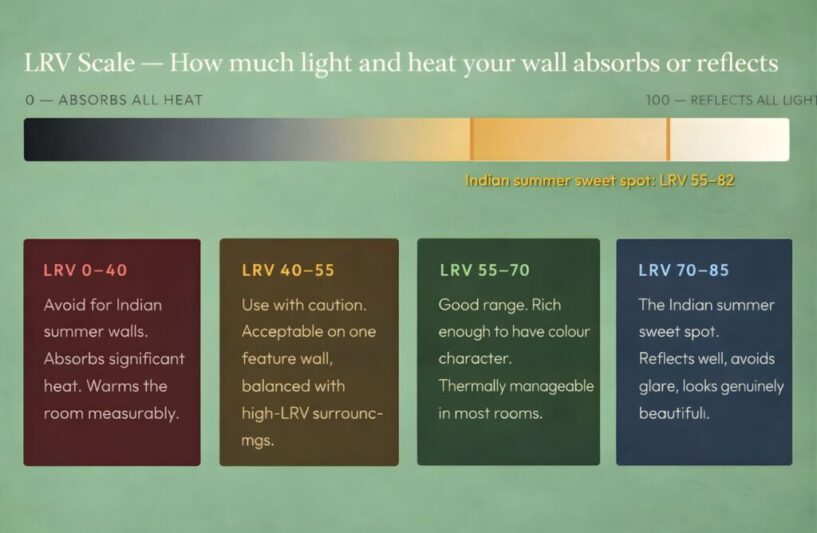
Every colour has a Light Reflectance Value, or LRV. It is a number between 0 and 100 that tells you how much light a colour reflects versus absorbs. Pure white is near 100. Pure black is 0. Most colours we use on walls sit somewhere between 30 and 85.
For Indian summer interiors, colours with an LRV above 55 are where you want to be. The good news is that this range covers a wide, beautiful set of tones, soft greens, warm creams, pale blues, sandy beiges, and muted pastels. All of them work well!
Your Room’s Orientation Changes the Colour Completely
The direction your room faces is not a minor consideration. It fundamentally changes how every colour behaves.
North-facing rooms get consistent, diffused light throughout the day. They are the most forgiving for colour. You can use deeper, more saturated shades without them creating glare or absorbing excess heat.
East-facing rooms get strong morning light that fades through the afternoon. Warm pastels shine here. Pale peach, soft yellow, and warm cream glow beautifully in the morning and settle into quiet warmth as the day moves.
South- and west-facing rooms get direct afternoon sun. It hits hardest here. These rooms need the highest LRV values. If you live in a high-floor apartment with south or west exposure, treat LRV as a non-negotiable starting point before you even look at colour names.
6 Colour Palettes That Work Best for Indian Homes in Summer
Here are six palettes that have held up in real Indian homes. Not on mood boards. In actual rooms, in Indian summer light.
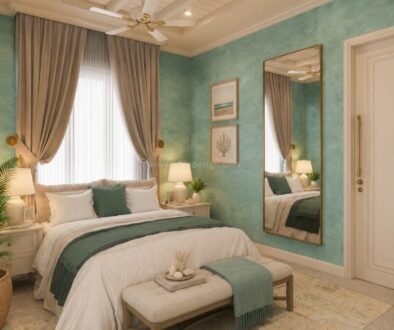
1. Pastel Green Accent Wall – Living Room
LRV: 60 to 72 | Mood: Fresh, calm, naturally cooling

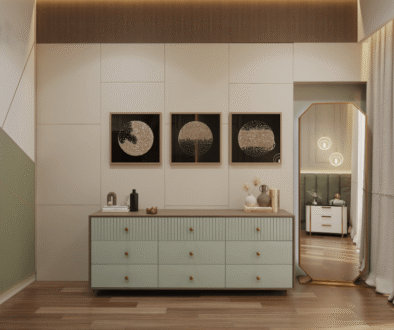
Soft pistachio or sage green on a single accent wall, with warm off-white on the remaining three. This is the palette that delivers the most return for the least disruption.
Green works in summer for two reasons. At the technical level, pastel green sits at a comfortable LRV and reflects well without the glare problem of stark white. At the sensory level, the human eye resolves green with less effort than any other colour. After hours under Indian summer light, a room with one sage wall is genuinely easier to rest in.
The cream and sage combination is trending for Indian homes, driven by the biophilic design movement. This design principle connects indoor spaces to nature through colour, material, and light reduces stress and improves perceived thermal comfort.
What to pair it with: Warm off-white on surrounding walls. Natural rattan or cane furniture. A jute rug in warm sand. Terracotta pots with areca palm or money plant. Brass hardware.
Vastu note: Sage green aligns with the north direction, ruled by the water element. It governs prosperity and clarity. For living rooms opening toward the north or northeast, this is both aesthetically and energetically right.
Styling tip: Pastel green shifts under Indian light. In east-facing rooms it glows at dawn, settles into cool quietness by midday. Switch your bulbs to warm white (2700K to 3000K) so the green reads warm in the evenings too.
2. Earthy Tones – Bedroom
LRV: 55 to 75 | Mood: Grounded, restful, cocoon-like
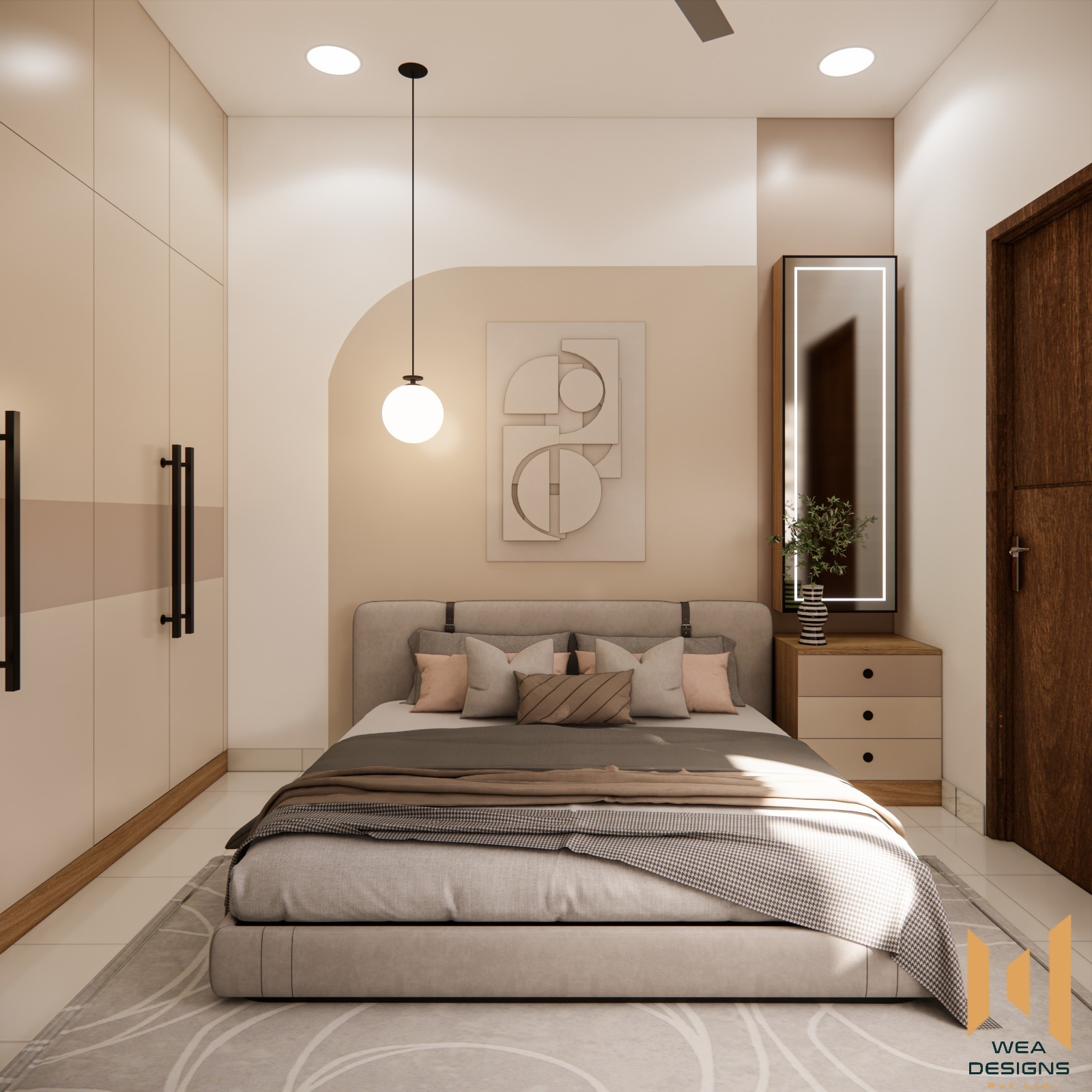
Mocha or warm taupe on the headboard wall. Cream or ivory on the surrounding three walls. Cotton or linen bedding in sand or warm white. This is the bedroom palette that feels like a genuine retreat from the Indian summer outside.
These earthy tones resonates deeply with Indian design heritage. From the mud plaster of Kerala homes to the clay walls of Rajasthan, earthy tones are a homecoming, not an import.
The one rule with earthy tones in summer: one wall only. A full room in deep mocha absorbs more heat and takes longer to cool after sundown. Limit it to the headboard wall and let cream do the thermal work on the other three.
What to pair it with: 100% cotton or linen bedding in cream or sand. Unfinished wood furniture. An olive green throw or curtain as a secondary earthy note. Ceramic lamps in muted tones.
Vastu note: Warm earth tones like mocha, beige, warm brown are recommended in Vastu Shastra for south-west facing master bedrooms. They represent the earth element: stability, rest, and security.
3. Seaside Blue and White – Living Room

LRV: 60 to 85 | Vastu: West / Northwest | Mood: Cool, breezy, instantly refreshing
Blue and white is the most instinctively cooling palette for Indian summers. And there is science behind why it works. Colour psychology research shows that blue-toned environments are perceived as 1 to 2°C cooler than warm-toned rooms at the same actual temperature. In Indian summer conditions, that perception gap is real and meaningful.
Jodhpur understood this centuries ago. The city’s blue-washed old-town homes were not just decorative. The pale indigo lime plaster reflected desert sun and kept interiors measurably cooler. Sky blue or dusty coastal blue on the walls with crisp white on the ceiling and trim is one of the most effective summer interventions available.
What to pair it with: Rattan or cane chairs for warmth against the cool blue. Sheer white curtains that move in the breeze. A cotton or sisal rug. Blue and white block-print or ikat cushions for a more Indian feel.
Vastu note: Blue is associated with the water element and the west direction in Vastu. Sky blue is recommended for north-east facing rooms, among the most spiritually significant directions in Vastu.
For humid cities: Avoid deep navy on full walls. High humidity makes deep cool blues feel oppressive rather than breezy. Stick to sky blue and aqua. Save indigo for cushions and accent pieces.
4. White and Beige With Natural Textures – Any Room

LRV: 70 to 90| Mood: Clean, expansive, timeless
This is the palette most people execute badly, which is a shame because done well, it is one of the most liveable in Indian homes.
The mistake is using cool stark white (blue or grey undertone) paired with synthetic furniture. Cool white creates glare and looks clinical under Indian afternoon light. The fix is simple: use warm white (cream or ivory undertone, LRV 78 to 85) and pair it with natural materials. A jute rug, linen curtains, teak or acacia furniture, terracotta accents. The materials do the personality work. The colours do the thermal work.
This palette makes small apartments feel significantly larger, reflects summer light generously, and works in any room facing any direction.
What to pair it with: Jute or sisal rug. Cream linen curtains in flowing fabric. Natural wood furniture. Terracotta or ceramic accent pieces. Indoor plants like snake plant, pothos, or peace lily as the primary colour statement.
Vastu note: White and cream are universally endorsed in Vastu across all rooms and directions. Beige adds the earth element’s grounding quality. This is the closest thing to a Vastu-neutral palette that exists.
5. Neutral Walls With Indoor Greenery – Living Room, Office, Entrance

LRV: 60 to 75 | Vastu: North / East | Mood: Calm, contemporary, biophilic
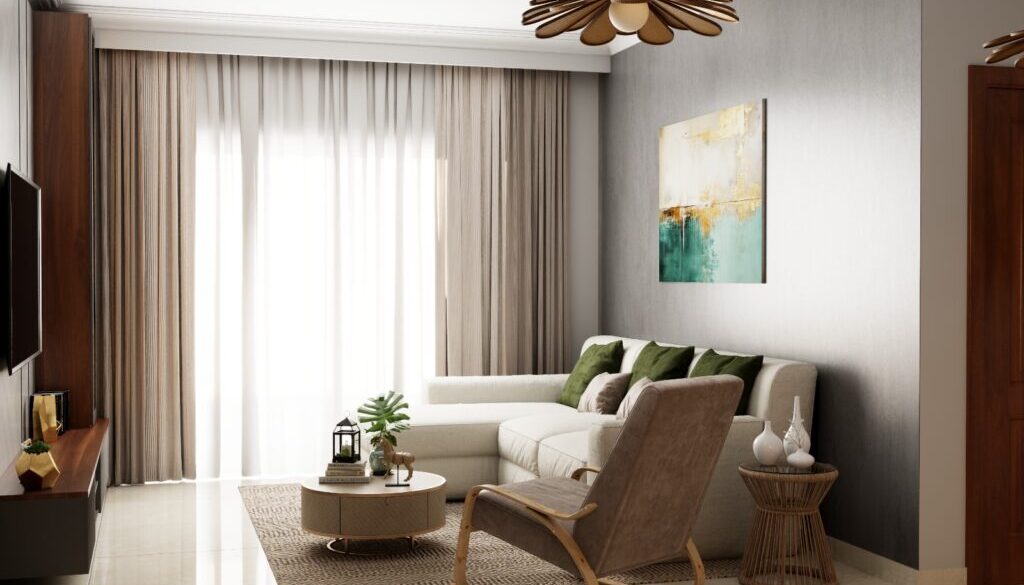
Warm grey, taupe, or warm white on the walls. No strong colour claim. The plants provide all the colour.
This biophilic design is simple. The contrast between still, quiet walls and living, textured plants is more compelling than most colour combinations. Research consistently shows that spaces with plants and nature-connected tones reduce perceived stress and make people feel more thermally comfortable at the same actual temperature.
In practice, three to five plants in terracotta pots at varying heights against a warm neutral wall do more visual work than ten decorative objects.
6. Soft Brown and Cream – Living Room, Bedroom, Dining Room

LRV: 65 to 82 | Vastu: Southwest / Universal | Mood: Warm, sophisticated, timeless
Warm cream on the walls. Soft brown tones like mocha, warm caramel, light chocolate as the sofa fabric, rug, or a single feature wall. Natural wood throughout. This palette never looks trendy because it was never a trend. It is just a very considerate way to make a home feel warm and permanent.
In summer it works because cream is high-LRV and does the thermal work, while the soft brown tones are used sparingly enough that the room does not accumulate heat. The visual warmth is tempered by the lightness of the cream base.
What to pair it with: Jute rug in golden tan. Cream linen soft furnishings. Natural wood furniture in teak or acacia. Terracotta or dark ceramic accent pieces. Warm LED bulbs (2700K) so the cream walls glow rather than flatten.
Vastu note: Beige, cream, and warm brown are among the most consistently Vastu-positive choices for any room. They represent earth energy like stability, comfort, and security.
3 Things That Make Any Palette Work Better
1. Follow a Simple Colour Structure
A balanced room usually follows:
- 60 percent walls
- 30 percent furniture and textiles
- 10 percent accents
This keeps the space visually comfortable and well-structured.
2. Always Test Colours in Your Actual Room
Do not rely on paint cards.
Test samples:
- Morning
- Afternoon
- Night
Indian sunlight is strong and directional. Testing prevents costly mistakes.
3. Consider Room Direction First
- North-facing rooms are flexible
- East-facing rooms work well with warm pastels
- South and west-facing rooms need high LRV colours
If your room gets harsh afternoon sunlight, prioritise reflectance over trend.
Colours to Avoid in Indian Summers
- Deep navy or cobalt on full walls
- Stark white with cool undertones
- Dark earthy tones on all walls
- Large black surfaces
These absorb heat or create visual discomfort under strong sunlight
Thinking About a Summer Refresh for Your Bangalore Home?
Every home responds differently to light, layout, and direction. What works in one space may not work in another. At WEA Designs, we help you choose colours based on how your home actually behaves, not just what looks good on a sample. Book a quick consultation and get clarity before you make a decision.