Best Flooring for Indian Summers: Cool, Durable, and Easy to Maintain
When we talk about keeping a home cool, most people think about wall colours, curtains, or air conditioning. Flooring barely comes up. Your floor covers every square foot of your home. A cool floor can make a room feel two to three degrees lower than the actual air temperature
This guide breaks down exactly which flooring materials keep Indian homes cool, which ones trap heat, and how to pick the right option for your climate zone and budget.
How Flooring Keeps You Cool
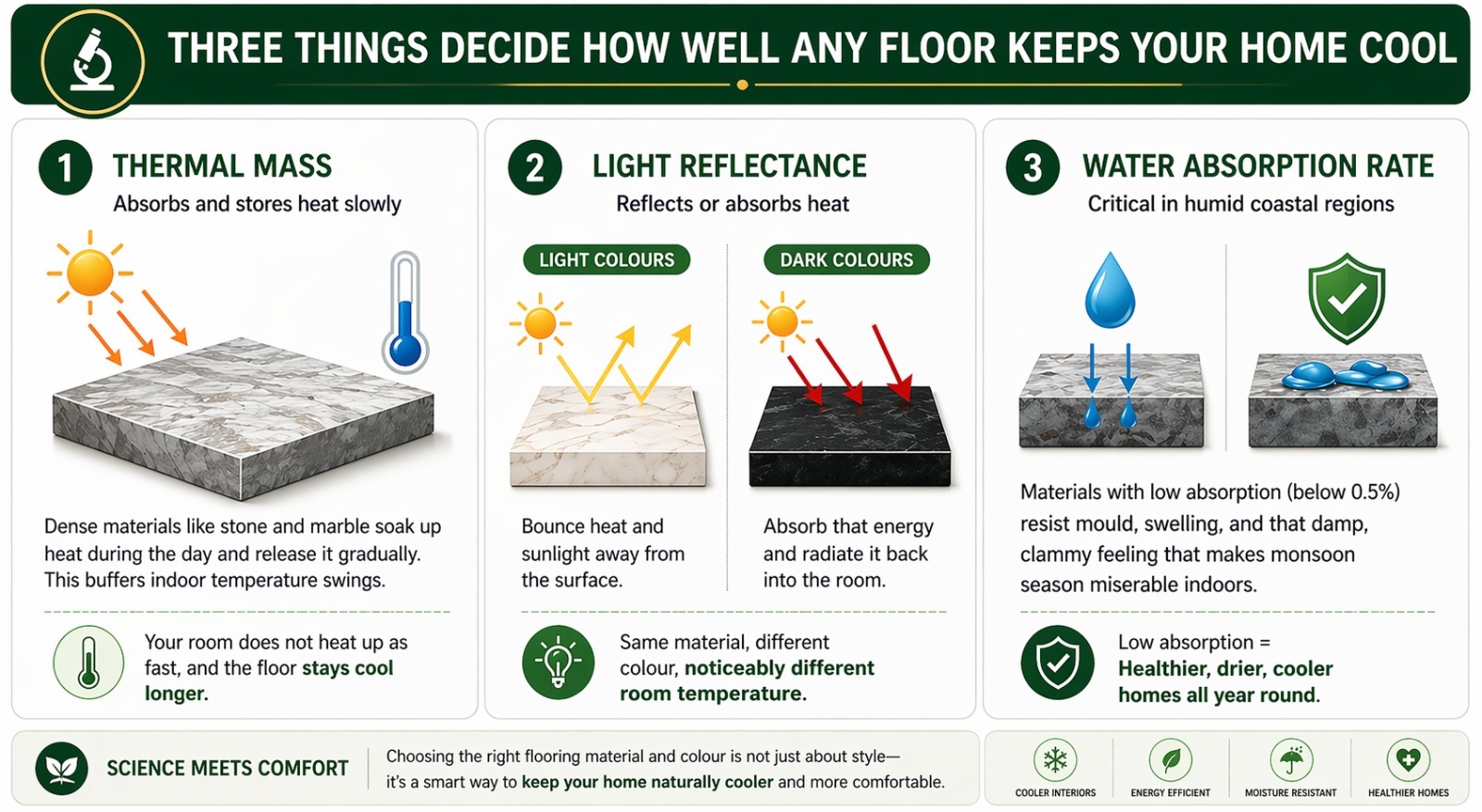
Every flooring material has something called thermal conductivity. In plain terms, it is how fast a surface pulls heat away from your body when you step on it.
Best Flooring Options for Indian Summers
Marble
Indian homes have used marble for centuries, and for good reason. Its dense crystalline structure absorbs heat very slowly and stays cool to the touch even on the hottest afternoons.
White and light-toned marbles work best for summer because lighter colours reflect more solar energy. Indian marble varieties like Makrana White from Rajasthan (the same stone used in the Taj Mahal) and Rajnagar marble deliver strong thermal performance without the price tag of Italian imports.
Where it works best. Living rooms, pooja rooms, foyers. These are areas where you spend time barefoot and where the cooling effect is felt the most.
Expect Indian marble to cost between ₹80 and ₹200 per sq ft for material alone, depending on quality and veining.
Vitrified Tiles
If marble is the luxury pick, matte vitrified tiles are the sensible one. They are the most widely installed flooring in modern Indian apartments, and for good reason.
Vitrified tiles are manufactured by fusing clay with silica and other minerals under extreme heat and hydraulic pressure. The result is a dense, glass-like surface with water absorption below 0.1% in quality products. That near-zero porosity means they resist humidity, stains, and heat absorption effectively.
Large-format tiles (600x1200mm or 800x1600mm) are especially effective in summer because fewer grout lines mean a smoother, cooler surface that is also easier to clean. And in Indian homes where wet mopping happens daily, that smoothness matters.
The finish makes a difference. Always choose matte or satin for summer homes. Glossy vitrified tiles create glare under strong sunlight and actually feel slightly warmer to the touch compared to matte finishes. Matte also gives better grip when wet.
Cost. ₹45 to ₹150 per sq ft, depending on brand and size. For most Indian households, vitrified tiles offer the best balance of cooling performance, durability, and value.
Granite
Granite is an igneous rock with a tightly packed crystalline structure. It conducts heat efficiently, which means it draws warmth away from your feet fast. That rapid heat transfer is why granite floors feel distinctly cool when you step on them barefoot in the afternoon.
South Indian granite, especially varieties from Karnataka and Tamil Nadu, is widely available and competitively priced. It is virtually scratch-proof, handles heavy foot traffic, and needs very little day-to-day maintenance.
Where it falls short. Polished granite becomes slippery when wet. For bathrooms and kitchens, honed or flamed finishes provide better grip without sacrificing the cooling benefit. Also, granite is porous unless properly sealed. In humid coastal climates, unsealed granite can absorb moisture and develop stains during monsoon. Resealing every two to three years keeps it performing well.
Cost. ₹60 to ₹300 per sq ft for domestic varieties. Lighter shades like Kashmir White offer better heat reflection than darker options like Absolute Black.
Kota Stone
Kota stone is one of the most overlooked flooring materials for Indian summers. Quarried from limestone formations in the Kota district of Rajasthan, it comes in distinctive bluish-green and brown tones and has been a quiet workhorse in South Indian homes, government buildings, schools, and hospitals for decades.
The cooling science behind Kota stone is similar to how earthen pots keep water cold. Its microscopic pores allow natural air exchange, and its high thermal mass means it absorbs heat slowly and releases stored coolness gradually throughout the day. Even during peak afternoon temperatures, Kota stone floors stay noticeably pleasant underfoot.
Unlike marble, Kota stone does not stain as easily. It actually improves in appearance with age, developing a gentle sheen as foot traffic naturally polishes the surface over time. It also has natural anti-slip properties, making it practical for kitchens, corridors, balconies, and anywhere water might hit the floor.
Cost. ₹20 to ₹90 per sq ft, depending on finish and thickness. That makes it one of the most affordable natural stone options in the Indian market. For budget-conscious homeowners who still want genuine passive cooling, Kota stone is hard to beat.
Terracotta Tiles: Ancient Cooling That Still Works
Terracotta literally means “baked earth.” These tiles have been part of Indian building traditions for thousands of years, dating back to the Harappan civilisation. Their porous structure allows natural air exchange, which prevents heat from building up indoors.
In modern Indian homes, terracotta works beautifully in courtyard areas, sit-outs, balconies, and living rooms paired with contemporary furniture. The earthy warmth of terracotta tones also creates a visually cool atmosphere, which adds to the psychological sense of comfort even before you step on it.
The practical note. Terracotta needs sealing to prevent excessive water absorption. Without proper treatment, it can stain and hold moisture during monsoons. Sealed and maintained well, it lasts decades and ages gracefully.
Cost. ₹50 to ₹90 per sq ft.
Red Oxide (IPS) Flooring: Heritage Cool on a Budget
Made from a simple mix of cement, sand, and iron oxide, these seamless floors reflect heat instead of absorbing it.
Red oxide flooring is making a genuine comeback in contemporary Indian homes, especially among homeowners who appreciate minimalist, eco-friendly interiors. The surface is naturally cool, affordable, and develops a beautiful patina over time.
Porcelain Tiles
Porcelain tiles sit at the top end of the tile category. Made from refined kaolin clay (china clay) and fired at temperatures above 1200°C, they achieve superior density and water absorption below 0.5%. That extreme density is what gives porcelain its reliable cooling ability. It conducts heat away from your body faster than regular ceramic or even some vitrified options.
Porcelain is especially suitable for high-moisture areas like bathrooms, kitchens, and covered balconies. Anti-skid matte finishes are the smart choice for Indian conditions where daily wet mopping is standard.
Cost. ₹100 to ₹200 per sq ft. More expensive than vitrified tiles, but the difference in moisture resistance and longevity can justify the premium in coastal and high-humidity regions.
SPC Vinyl Flooring
Stone Polymer Composite (SPC) flooring has been gaining popularity in Indian homes over the past two to three years. Made from a blend of limestone powder, PVC, and stabilisers, SPC planks are 100% waterproof. They will not swell, warp, or buckle in humid conditions, and they are completely termite-resistant.
SPC installs over existing floors using a click-lock system, which means no demolishing old tiles, no adhesive mess, and no curing time. For renters or people who want a quick upgrade, that ease of installation is a big plus.
SPC does not provide the active cooling effect that stone or tile does. It maintains a neutral temperature underfoot. It will not make a hot room cooler the way marble or Kota stone can. Think of it as a moisture-proof, low-maintenance option that avoids making things worse rather than actively making them better.
Cost. ₹120 to ₹300 per sq ft.
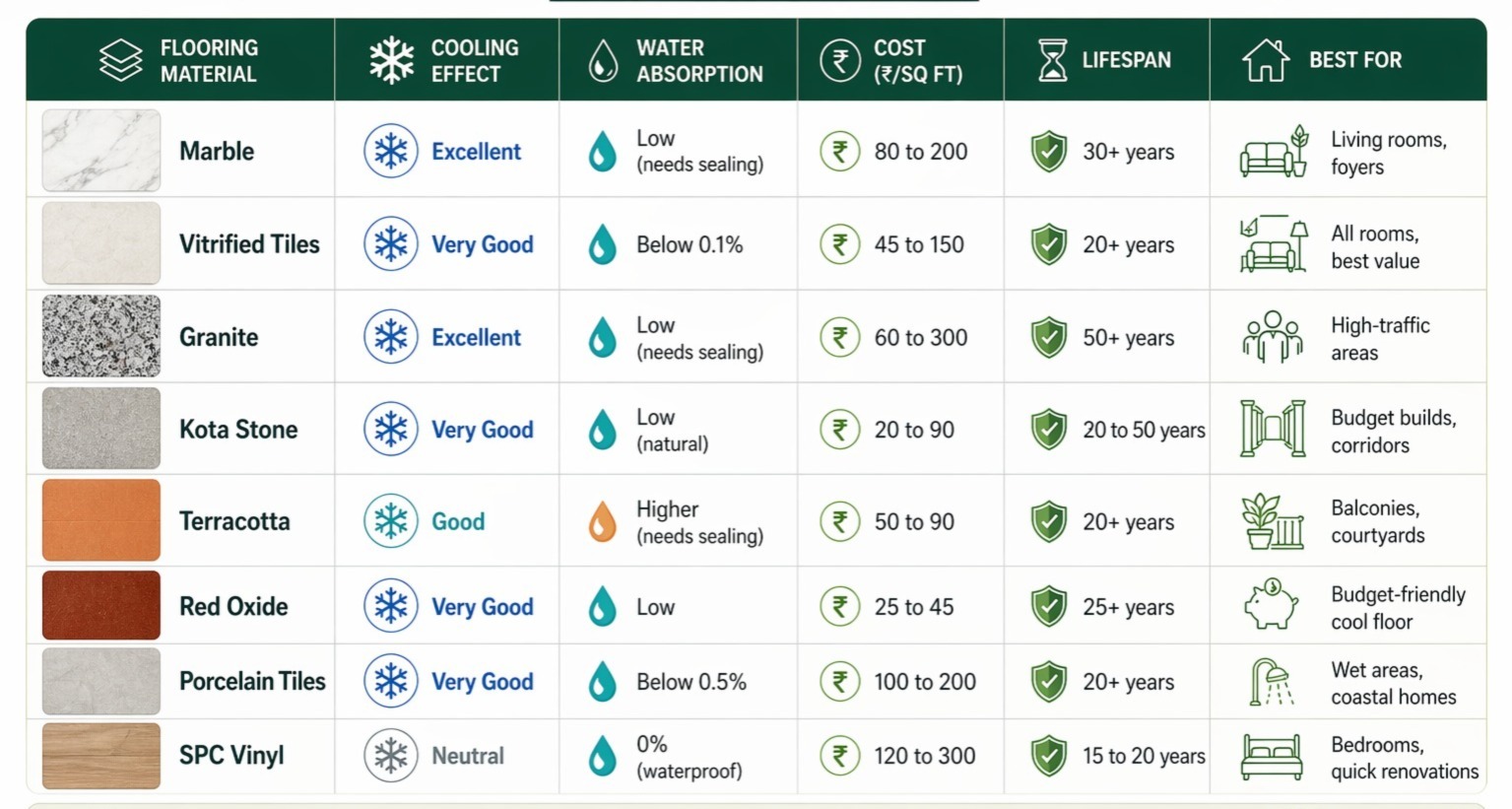
Summer Flooring Comparison at a Glance
Room by Room: What Works Where
Living Room
This is where you spend the most time and where guests notice things first. Go with large-format matte vitrified tiles or marble. Both stay cool, clean easily, and look refined. If budget allows, marble gives a noticeably cooler touch. Kota stone works well here too if you prefer a more earthy, traditional look.
Bedrooms
Comfort matters most here. Matte vitrified tiles paired with a removable cotton dhurrie or jute rug beside the bed give you the best of both worlds. The tile keeps the room cool. The rug adds a soft landing for your feet first thing in the morning. Roll the rug up when monsoon humidity arrives.
Kitchen
Kitchens already generate heat from cooking. A warm floor makes things worse. Choose anti-skid vitrified tiles or Kota stone. Both handle water spills, resist staining, and stay cool. Avoid glossy finishes in the kitchen. Oil and water on a polished surface is a slip hazard you do not need.
Bathrooms
Safety first, cooling second. Anti-skid porcelain or ceramic tiles in a matte finish handle constant water exposure, dry quickly, and stay cool. Choose lighter tile colours. It makes the space feel brighter and psychologically cooler.
Balconies and Outdoor Sit-outs
These areas take direct sun exposure, so the flooring choice matters a lot. Kota stone, terracotta tiles, or matte anti-skid vitrified tiles handle sun, rain, and temperature swings without cracking or fading. Avoid anything glossy. Sun glare off a shiny balcony floor is uncomfortable.
What to Avoid if You Want a Cool Home
Knowing what not to use is just as important as knowing what works. Here are the flooring choices that work against you in an Indian summer.
Thick Wall-to-Wall Carpets
Carpets trap heat, dust, and humidity, making rooms feel warmer and stuffier. They also attract mould and dust mites during monsoon. If you want something soft underfoot, a thin cotton dhurrie or jute rug works much better. You get the comfort, and you can roll them up when the rains arrive.
Solid Hardwood Flooring
Hardwood holds heat and can warp due to constant changes between summer heat and monsoon moisture.
If you love the wood look, wood-look vitrified tiles give you the visual without the heat retention or moisture damage.
Dark-Coloured Tiles and Stone
Dark floors absorb more sunlight and radiate heat back into the room, making interiors noticeably warmer.
Laminate Flooring
Laminate is sensitive to water and humidity. Daily mopping or small leaks can cause swelling, bubbling, and peeling.
Unsealed Natural Stone
Unsealed stone absorbs moisture, leading to stains, dampness, and white salt deposits during humid seasons. Natural stone works well in Indian homes, but only if you commit to proper sealing at installation and resealing every few years.
Already Living with Warm Floors? Try These Fixes
Not everyone has the option to rip out their existing floor and start over. If you are living with wood, laminate, or dark-toned floors, these adjustments make a real difference without a full renovation.
- Swap thick rugs for thin cotton spreads.
- Mop with cold water in the morning.
- Control sunlight hitting the floor.
- Place indoor plants near windows.
Climate Zones and What They Mean for Your Choice
India is not one climate. Your flooring decision should reflect where you actually live.
Coastal Humid Regions
(Kerala, Goa, Chennai, Coastal Karnataka)
Choose vitrified or porcelain tiles with anti-skid finish.
Avoid solid wood. Red oxide and Kaavi flooring work well for cooling and heritage-style homes.
Dry Heat Regions
(Rajasthan, Delhi NCR, UP, MP)
Granite, marble, and Kota stone perform best here.
They stay cooler and handle dry weather well.
Moderate Climates
(Bangalore, Pune, Hyderabad)
Vitrified tiles and granite are the safest year-round choices.
Marble works well but needs more care during monsoon.
Hot and Humid Cities
(Mumbai, Kolkata, Coastal Andhra)
Vitrified tiles with strong waterproofing work best.
SPC vinyl is also a good option for quick apartment renovations.
Installation Tips That Save You Money and Trouble
Prep the Subfloor First
An uneven or damp subfloor causes cracks, hollow spots, and loose tiles.
Always invest in proper waterproofing, especially for ground floors.
Leave Expansion Gaps
High summer temperatures make tiles expand.
Without proper gaps, tiles may buckle, crack, or lift over time.
Choose Light-Coloured Tiles
Beige, ivory, and off-white tiles reflect more heat than dark shades.
This helps keep your floors naturally cooler during summer.
Keep 10–20% Extra Material
Tile cutting creates unavoidable waste.
Extra stock prevents shade mismatch if you need more tiles later.